
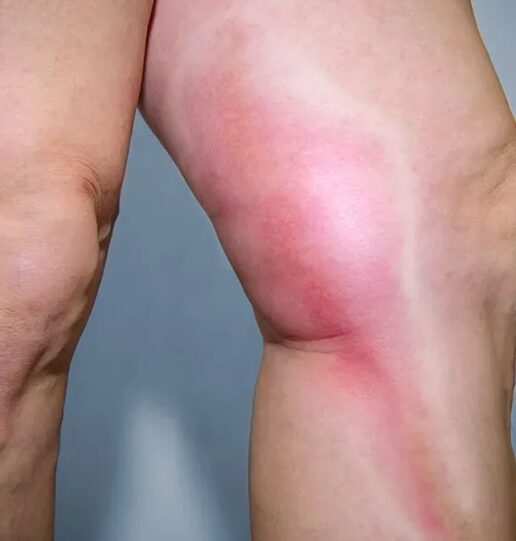

Thrombophlebitis is an inflammatory process that causes a blood clot to block a vein. It happens more commonly in the legs, but it can happen in any part of the body like the wall of the abdomen. When it occurs in a vein near the skin surface, it is called superficial thrombophlebitis and this develops as a complication of a varicose vein.
As we know, varicose veins are big, dilated, twisted, and swollen veins that often have slow or poor blood flow. Sluggish blood flow makes it easier for blood clots to form, which triggers inflammation in the vein wall. While superficial thrombophlebitis is generally localized and much less serious than deep venous thrombosis, it does require evaluation by a vascular surgeon to prevent it from spreading toward the deep venous system.
On examination, the veins are painful and tender, with redness, warmth, and swelling.
The treatment is over-the-counter pain relievers like Motrin (nonsteroidal anti-inflammatory drugs, or NSAIDs) taken regularly for a week to 10 days, warm compresses to the affected area, compression stockings if in the leg, and elevation. If the clot is extensive, then blood thinner medication may be needed. If the clot is close to where superficial veins join the deep veins, additional procedures may be needed.
Superficial thrombophlebitis typically improves on its own in two to six weeks. However, it is important to monitor for signs of progression and make sure that it is not extending into the deep veins or traveling to the lungs — serious conditions known as deep venous thrombosis or pulmonary embolism.
BIO: Dr. Aparajita is a fellowship-trained vascular and endovascular surgeon. She is a co-author of 20-plus journal articles and publications and was recently nominated for an Inspiration Award by the American Medical Association.
This column is sponsored by KSC Cardiology, and the opinions expressed herein may not reflect those of CFHN or its advertisers.