
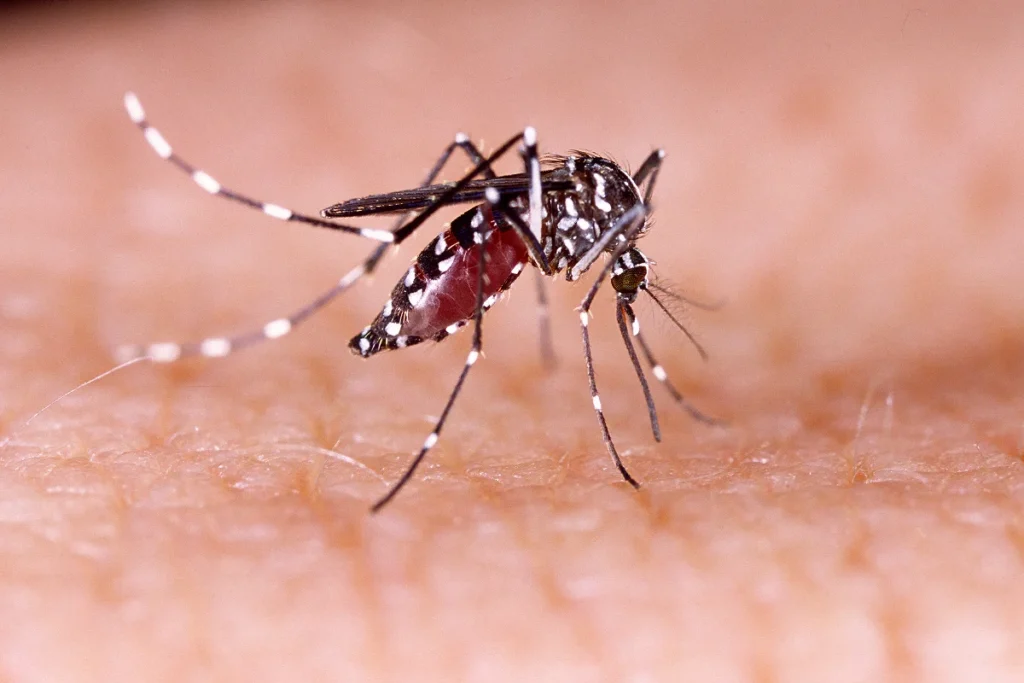

Any seasoned Floridian is familiar with the many illnesses mosquitoes can leave in their wake. West Nile virus, Eastern equine encephalitis, and Zika are the usual suspects, but there is one making waves that is not historically prevalent or native to Florida: dengue fever.
Cases of dengue fever have been surging this year, with Florida leading the nation. The Florida Department of Health-Polk County on September 24 confirmed a locally acquired case, making it one of 339 cases in the state — 153 of which were acquired within the state. Hillsborough County has been a hotspot of activity with 134 cases. In mid-September, an 80-year-old Hillsborough County woman died from complications of dengue fever. It’s important to remember, however, that it typically is not fatal and that only in rare cases does it become life-threatening.
Dengue infection is acquired through the bite of a specific species of mosquitoes — Aedes aegypti and Aedes albopictus — both of which are present in Florida.
According to the Florida DOH, symptoms usually appear three to 14 days after the bite of an infected mosquito and last for two to seven days. Symptoms include sudden fever, severe headache, eye pain, muscle and joint pain, and gastrointestinal upset.
The CDC says there is no widely available dengue vaccine, so prevention hinges on protecting yourself from bites:
- Use insect repellant.
- Wear loose-fitting, long-sleeved shirts and pants.
- Control mosquitoes around your home by removing any standing water where mosquitoes can breed and lay eggs. (Bird baths, kiddie pools, buckets, discarded tires, and even clogged gutters are common sources.)
As the rainy season wraps up in Central Florida, exercise caution and be smart about protection.