
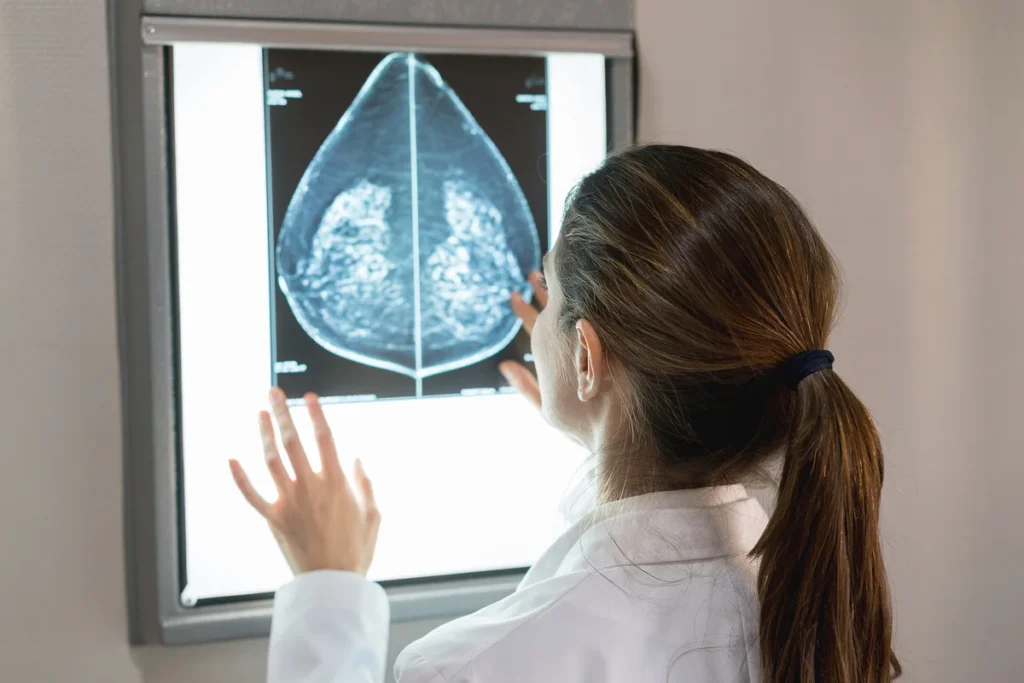
October is Breast Cancer Awareness Month, highlighting the second most-common cancer in women behind skin cancer. Breast cancer accounts for one out of every three newly diagnosed cancers in women annually. Take our quiz and take the first steps in fighting breast cancer!
- There are many kinds of breast cancer, each of which is decided by the location in the breast where it begins to grow, how much the cancer has grown or spread, and certain features that influence how the cancer acts. Which of the following is a rare type of breast cancer rather than a common one?
- Invasive ductal carcinoma (IDC), a breast cancer that starts in the milk ducts.
- Invasive lobular carcinoma (ILC), a breast cancer that starts in the lobules, the glands in the breast that produce milk.
- Triple-negative breast cancer, a type of invasive breast cancer that tests negative for estrogen receptors and progesterone receptors and doesn’t have extra HER2 proteins.
- Triple-positive breast cancer, a cancer that tests positive for estrogen receptors and progesterone receptors and has too many HER2 proteins.
- Inflammatory breast cancer, an aggressive type of invasive breast cancer.
- Which of the following is the definition of HER2?
- A protein that helps breast cancer cells grow quickly
- A test for breast cancer
- A treatment for breast cancer
- None of the above
- The most common symptom of breast cancer is a new lump or mass. Which of the following are other possible signs and symptoms of breast cancer?
- Swelling of all or part of a breast and/or swollen lymph nodes under the arm or near the collarbone
- Skin dimpling and/or skin that is red, dry, flaking, or thickened
- Breast or nipple pain
- Nipple retraction (turning inward) and/or nipple discharge
- All of the above
- Which of the following is NOT a risk factor for developing breast cancer that is out of your control?
- Sex. Though men can get breast cancer, the overwhelming majority of those with breast cancer are female.
- Age. The risk of breast cancer increases with age.
- Breast size. Larger breasts are more prone to developing cancer.
- Race and ethnicity. Breast cancer is most common among white women in the U.S.
- Genes. Having a family history of breast cancer increases your risk.
- Height. Taller women have a higher risk of breast cancer than shorter women.
- Which of the following is NOT a risk factor for developing breast cancer that is within your control?
- Being overweight, especially after menopause
- Being inactive
- Drinking alcohol
- Smoking tobacco
- High caffeine consumption
- Never being pregnant or having a first pregnancy at age 35 or later.
- True or false? For women with a higher-than-average risk of breast cancer, some medicines—like tamoxifen, raloxifene, and aromatase inhibitors—can help reduce this risk.
- True or false? In the past, Hormone Replacement Therapy (HRT) carried a “black box warning” that included a higher risk of breast cancer. However, newer studies suggest this risk is much lower than previously thought.
- Along with monthly breast self-exams and regular mammograms, which of the following are common tools used to detect breast cancer?
- Breast ultrasound
- Breast MRIs
- Three-dimensional mammograms
- All of the above
- When a breast cancer diagnosis occurs, doctors and a medical team will devise a treatment plan tailored to the specific cancer. Which of the following is NOT a viable treatment option?
- Surgery
- Chemotherapy drugs, which are powerful medicines that kill cancer cells or stop them from growing, given before or after surgery
- Radiation therapy, which kills cancer cells and shrinks tumors
- Ivermectin
- Additional therapies like hormonal therapy, targeted therapy, and immunotherapy
compiled by ERIKA ALDRICH / Information provided by breastcancer.org and cancer.org.
ANSWERS
- E. Inflammatory breast cancer
- A. A protein that helps breast cancer cells grow
- E. All of the above
- C. Breast size does not affect cancer risk.
- E. High caffeine consumption does not affect breast cancer risk.
- True
- True
- D. All of the above
- D. Ivermectin