
by RYAN MILEJCZAK
Sponsored by Central Florida Health Care
More than 40 million Americans — roughly 12% of the U.S. population — live with diabetes, primarily type 2. In Florida alone, more than 2 million people have received the diagnosis. In fact, for Central Florida Health Care endocrinologist Dr. Scarlette Garcia-Avila, it’s the most common condition she treats.
“If I get a sample of 10 patients, I would say seven of them are diabetic,” she says.
Endocrinology is the branch of medicine that deals with the body’s hormones and the glands that produce them, known as the endocrine system. While diabetes is the most well-known, and most common disease endocrinologists treat, they treat any condition involving the endocrine system.
“Endocrinology’s bread and butter is diabetes and thyroid disease,” Dr. Garcia says. “But there’s a wide realm of endocrinological diseases that might not be common knowledge.”
In addition to diabetes and thyroid disease, endocrinologists also treat metabolic syndrome, menopause, weight loss, transgender care, and sexual and growth hormone issues.
Dr. Garcia was drawn to endocrinology in part because of what she saw during COVID-19, when patients with obesity and diabetes saw more complications and died sooner than others.
“Diabetes is a pandemic,” she says. “I decided to help society as much as I can.”
She also enjoys the “Sherlock Holmes” aspect of the work she gets to do, carefully considering a patient’s history, lifestyle, and labs to come up with a diagnosis. And because she usually sees her patients over the course of multiple years, she gets to form long-lasting relationships with them.
“I love talking to my patients,” she says. “I love creating bonds that will last for years.”
In the five years Dr. Garcia has spent in endocrinology, she’s seen a number of advancements in how diabetes is treated.
“The technology for insulin pumps has evolved significantly,” she says.
Pumps now have better algorithms that help patients manage their levels without significant changes to their day-to-day routine. In addition, pumps, which used to be primarily for type 1 patients, are also increasingly used in patients with type 2 diabetes. The second tubeless pump is expected to hit the market soon.
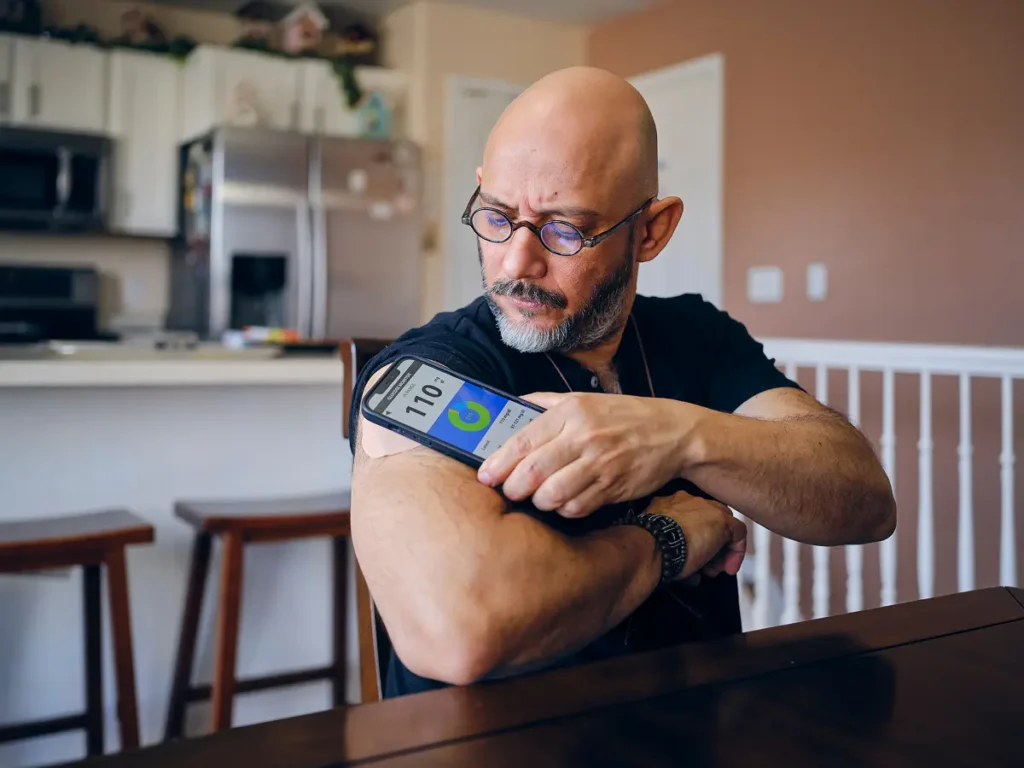
Glucose monitors also have advanced. When Dr. Garcia first started, continuous glucose monitors needed to reconnect to a receiver, such as a phone, every eight hours, and would lose signal easily if separated from the phone. Now, sensors connect automatically over a stronger Bluetooth signal.
Other advancements include insulin that can be placed weekly and advances in islet cell transplants for type 1 patients to help restore insulin-producing cells without a full pancreas transplant.
Barriers to Treatment
Despite these advancements, many with diabetes still face barriers to treatment.
“The number one barrier is the cost of medications,” Dr. Garcia says.
Many first-tier medications, such as GLP-1 agonists, are particularly expensive. Some patients also won’t qualify for a sensor, meaning they must resort to a painful finger stick several times a day instead.
High demand adds an additional challenge, making it difficult for patients to schedule an appointment with an endocrinologist.
CFHC, on the other hand, is able to help patients overcome these barriers. Its healthcare navigators guide patients through the process, working with their insurance to get more medications covered and arranging transportation to appointments. CFHC’s pharmacy makes treatment even more feasible by also offering low-cost medications.
“We give patients the lowest cost on the market,” Dr. Garcia says. “We try to bring patients in as frequently as we can to avoid treatment delays and patients getting lost in care.”
CFHC will soon be opening its Diabetes Center of Excellence in Lakeland. The center will feature endocrinology, dietitians, and a full teaching kitchen to help patients with diabetes better manage their condition. In addition, CFHC plans to start offering thyroid biopsies soon.