

SEU Link Graduate Featured in Launch of Autistic Barbie
by SHAYLYNN MARKS
When she was a child, Aarushi Pratap spent hours playing with Barbie dolls, imagining stories and worlds of her own. What she never saw reflected back at her, however, was herself.
“When I was a kid, I played with Barbie dolls, and I always wished there was an autistic Barbie,” Pratap says.
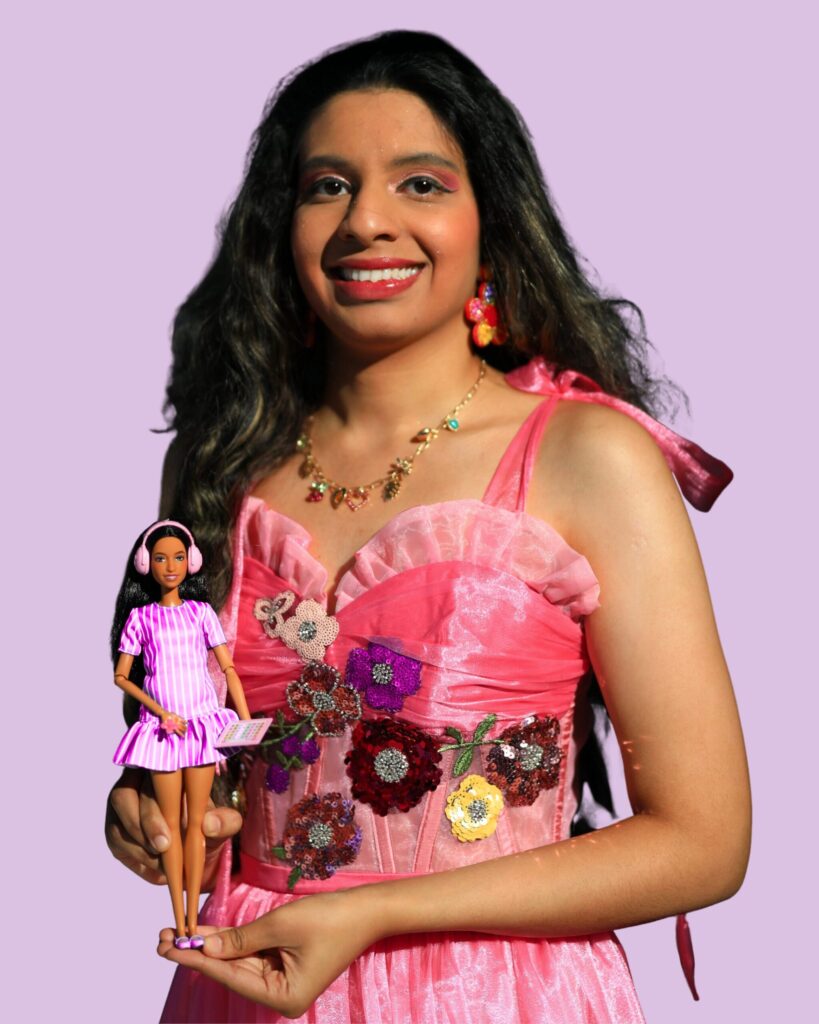
That wish became a reality earlier this year when Mattel launched its first-ever autistic Barbie, selecting Pratap, a fashion designer, visual artist and autism advocate, as one of the role models featured in the doll’s debut. For the SEU Link graduate, the moment marked more than a professional milestone. It represented a cultural shift toward visibility, understanding, and inclusion for autistic people.
“This Barbie can help autistic people feel understood,” she says. “I want autistic people to feel seen and included.”
Finding a Voice Through Creativity
Pratap, who now lives in Tampa, was diagnosed with autism at the age of 2 and experienced challenges with speech and communication growing up. Communication did not always come easily, and traditional modes of expression often felt limiting. Over time, creativity became her primary language, using it as a way to translate thoughts and emotions that were difficult to articulate verbally.
Art and fashion offered Pratap a means of connection, allowing her to express herself visually and build relationships on her own terms. That creative outlet also shaped how she understands her own identity. Rather than viewing autism through a medical or deficit-based lens, she describes it as an essential part of how she thinks, creates, and experiences the world.
“Autism is my superpower. It’s not a disability,” she says.
Fashion as Communication and Self-Expression
Fashion, in particular, became one of Pratap’s most powerful outlets. After receiving a sewing machine for her 14th birthday, she began experimenting with fabrics, silhouettes, and textures, teaching herself how clothing could tell a story.
Her designs are often ornate and colorful, influenced by fantasy, historical garments, and her cultural heritage.
That influence was on display at New York Fashion Week 2025, where Pratap debuted her collection Storied Roots. The collection drew directly from her family history, transforming traditional Indian silks into contemporary couture.
“I used my grandma’s old saris from India to create flamboyant and luxurious dresses,” she said.
At the same time, her work is grounded in practicality. As an autistic designer, Pratap is acutely aware of how clothing feels on the body. Sensory comfort plays a central role in her creative process, shaping decisions about fit, fabric weight, and movement.
Pratap’s work brings function and beauty together, challenging conventional ideas about what high fashion looks like and who it is designed for.
Sensory-Inclusive Design and Representation
That perspective closely aligns with the intent behind the new autistic Barbie. The doll features a lavender-and-white pinstriped dress with a relaxed fit and ruffled hem, paired with flat purple shoes designed for comfort and stability.
Pratap pointed to the doll’s accessories as especially meaningful.
“She has noise-canceling headphones and a communication tablet to help her communicate,” Pratap says.
The flexible joints at the elbows and wrists allows the Barbie to have a wider range of movement, and a hot pink fidget spinner is included to help with self-regulation and stress management. Each element reflects the diversity of needs and experiences within the autism community.
While Pratap did not design the doll herself, she served as a role model and advocate throughout the launch process, sharing her lived experience and helping amplify conversations around authentic autism representation.
Mattel partnered with the Autism Self Advocacy Network over an 18-month period to develop the doll, working closely with autistic advocates to ensure the design reflected real needs rather than stereotypes.
For Pratap, being selected as a Barbie role model was deeply personal. As a child, she watched Barbie movies repeatedly and drew inspiration from the elaborate gowns, colors and fantasy worlds they portrayed. Seeing autism represented within that same universe felt both validating and overdue.
“It was my dream come true,” she says. “I felt really accepted and excited.”
Education and Self-Advocacy
Pratap is a graduate of Southeastern University’s Link program, an inclusive postsecondary education initiative designed to support young adults with intellectual disabilities. During her time in the program, she completed internships, self-advocacy coursework, and work readiness training.
“SEU helped me grow and advocate for myself,” she says.
Advocacy, Autonomy and What Comes Next
After completing the SEU Link program, Pratap began working professionally as a fashion designer while continuing to expand her advocacy efforts. Her work extends beyond the runway, encompassing public speaking, fundraising events and community partnerships focused on inclusion and disability awareness.
Through these efforts, Pratap aims to challenge misconceptions that frame autism as a limitation rather than a different way of engaging with the world.
“I want to tell the whole world about autism,” Pratap says. “I want people to understand and respect autistic people.”
Looking ahead, Pratap is setting some personal goals alongside her professional work to experience new places and take trips to visit her friends.
“I want to learn to go to a hotel by myself and travel by myself,” she says.
As the autistic Barbie reaches store shelves, Pratap hopes the doll will offer something she never had growing up: a chance for autistic children to see themselves reflected, valued, and understood.
“I am always proud of myself,” she says. “I achieved my goals, and now I am setting new goals for my future.”