
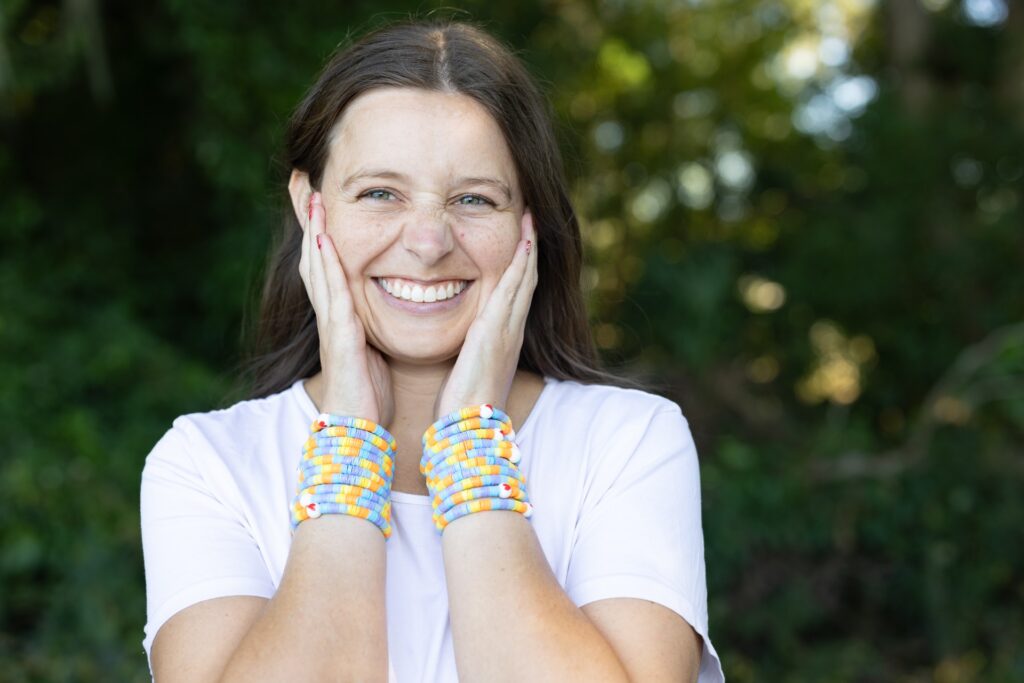
by SHAYLYNN MARKS
The learning didn’t stop when school let out for summer break. But this time it was the teachers who were the students.
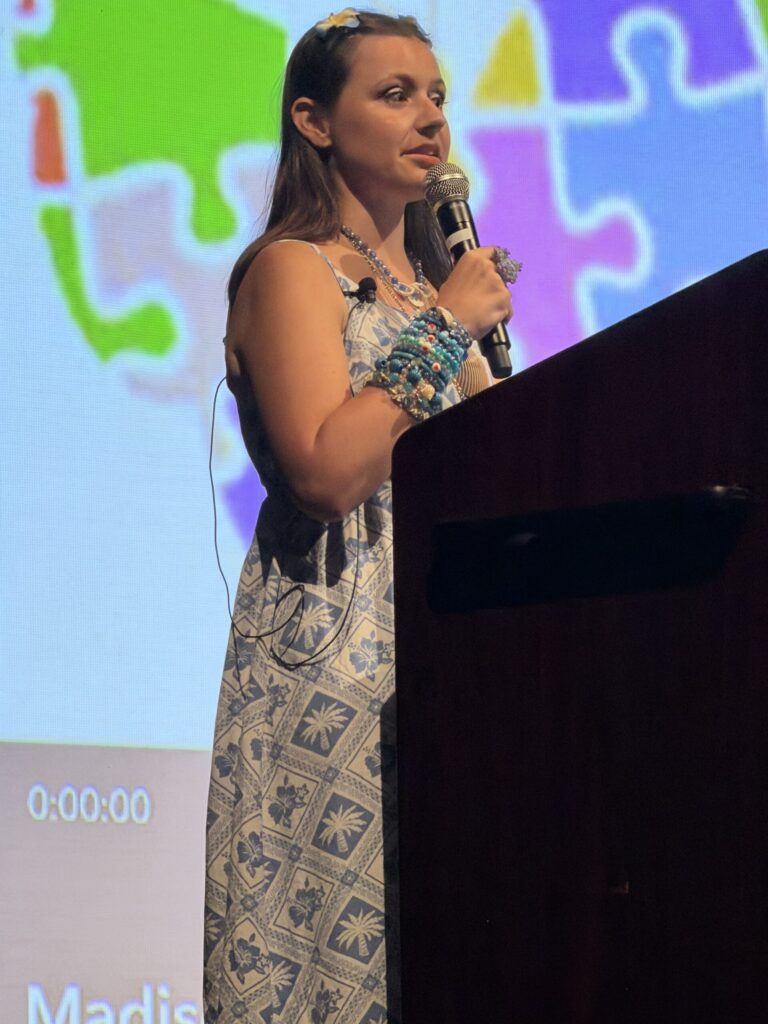
Madison Marilla, an educator and public speaker featured in Seasons 3 and 4 of Netflix’s “Love on the Spectrum,” shared classroom insight with Polk County Public Schools teachers and paraprofessionals during a June professional development event at Harrison School for the Arts. Donations to the Polk Education Foundation made the event possible, with the PCPS Teacher Engagement team helping to organize the session.
Marilla, who lives in Plant City, has worked as a school activities director, mentor, and support staff member for autistic children. She spoke with Polk educators, sharing her experience as both a student who once needed support and the adult who later provided it.
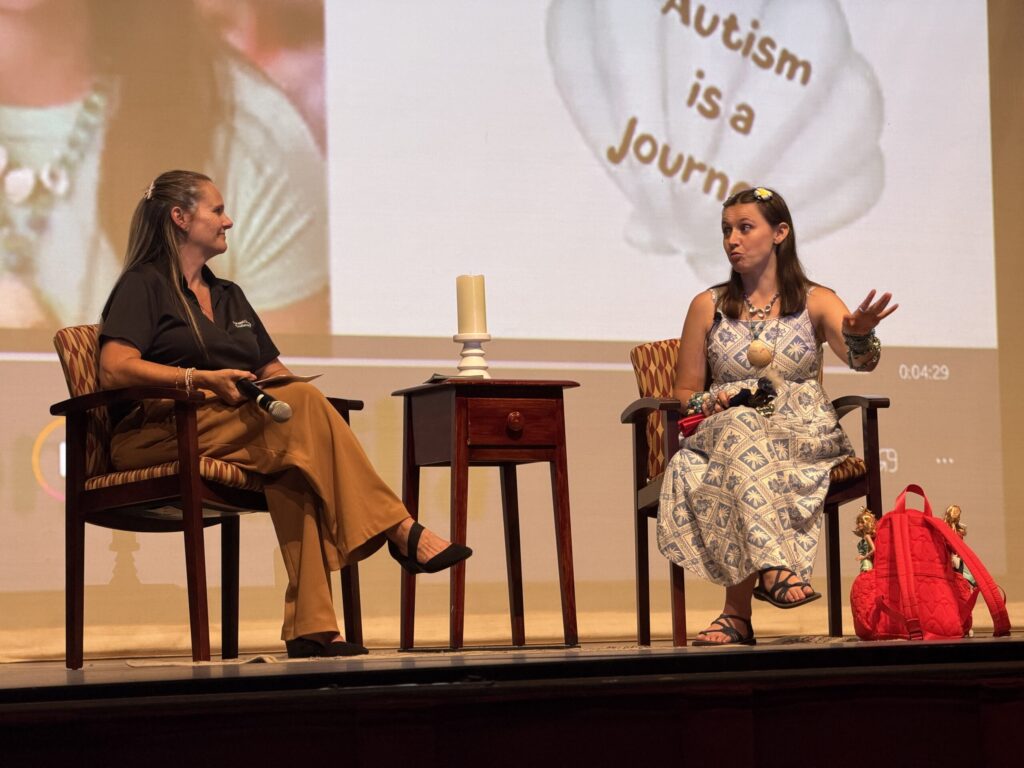
A Student’s Perspective
Marilla was diagnosed with autism at age 2 and didn’t begin speaking until she was 3. She attended a special education preschool before moving into mainstream public schools.
“Starting kindergarten at a mainstream school was a struggle for me, as I felt different from all the other students,” she says.
In childhood, Marilla worked through social skills, classroom routines, and emotional regulation with help from teachers who paid attention to how she learned. One teacher helped her discover new methods for staying focused.
“My fifth-grade year, I learned that music helped me focus,” Marilla says. “He always had music playing every time he was teaching and every time we were working.”
“I would say definitely accommodate the best to their needs is the biggest thing, … and finding the students’ learning style,” Marilla advised.
“No two students are alike.”
Turning Understanding into Change
After Marilla’s family moved from California to Massachusetts when she was in eighth grade, she entered a new school where classmates didn’t understand her autism.
“No one knew I was autistic,” Marilla says.
With help from a special education teacher, Marilla gave a current-event presentation about autism awareness.
“I presented that current event to my history class, and every kid in the class had questions and started to apologize,” she says. “That became a turning point for me.”
In high school, Marilla says a peer mentor helped her understand that advocacy could become part of how she moved through school.
“It’s best to let yourself out than to hold yourself in,” Marilla says. “This meant I needed to educate others about my autism and explain to my classmates who misunderstood my autism.”
She later launched autism awareness fundraisers, an Autism Awareness Club, and began mentoring autistic children in her community.
Boundaries Without Apology
For Lori Allen, senior director of foundational learning and educational systems for Polk County Public Schools, Marilla’s keynote offered a clear reminder.
“She, like everyone else, just wants to be a normal person and accepted for who she is,” Allen says.
Allen says Marilla’s eighth-grade story and her experience with her fellow students really stood out.
“They not only heard her but took responsibility for their behavior toward her,” Allen says. “I thought that was huge.”
Allen also says Marilla models something educators and students can learn from.
“I love that she was very comfortable marking her boundaries without being disrespectful,” Allen says. “She was very clear in what she accepted and what she didn’t.”
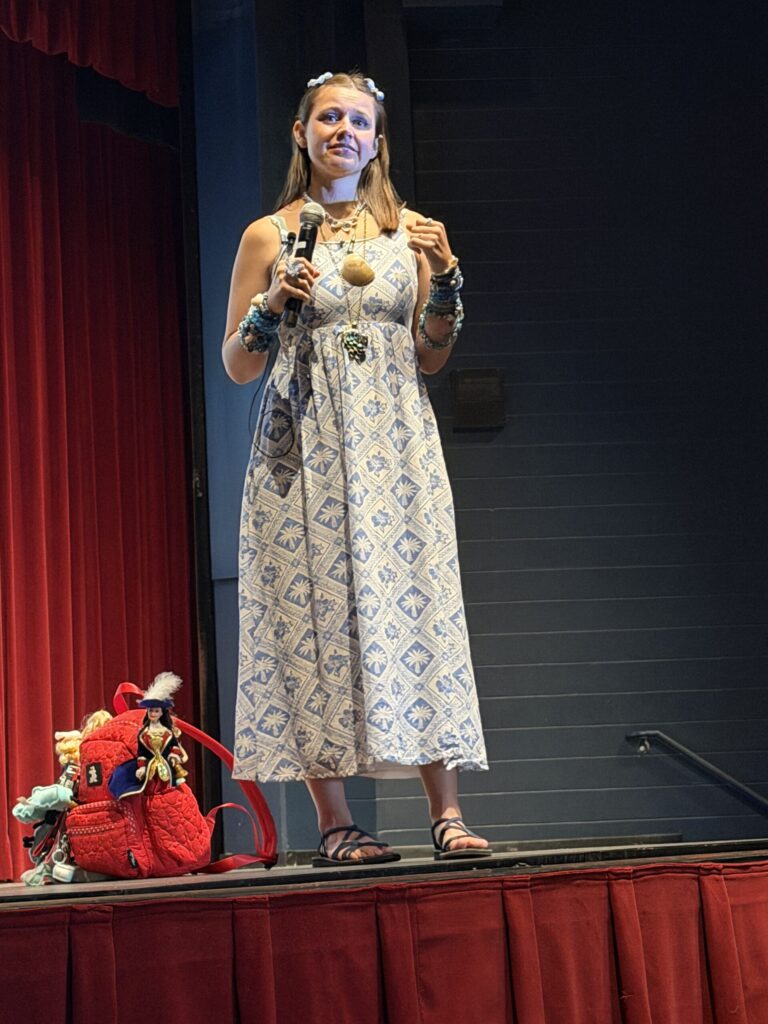
Marilla also talks about masking — hiding autistic traits to act in ways that come naturally to nonautistic individuals. She reminds educators that confidence can grow when students aren’t pressured to hide what helps them cope.
“I have never masked because I have had very great mentors and therapists that told me to not mask,” Marilla says. “I do not feel embarrassed to carry my dolls around with me.”
Classroom Takeaways
Joely Atchison, a first-grade general education teacher at Walter Caldwell Elementary in Auburndale, says about a third of her class this year was autistic, making Marilla’s message especially relevant.
“I think the thing that I took away from listening to Madison was to keep letting the children express themselves and to keep advocating for them,” Atchison says. “I want to be that guide for them.”
Lisa Kemraj, a fourth-grade teacher at Walter Caldwell Elementary, says that scenario changes by upper elementary school. Some students can ask for help, but some still struggle socially.
“They can tell me that they don’t understand something, they need extra help, they need some kind of manipulative to help them with something,” Kemraj says. “But when they’re playing with other kids, especially at recess, sometimes I see them by themselves.”
That is when Kemraj says teachers can keep guiding students toward connection.
“It’s trying to have them explore,” she says, “like not eating lunch alone … making sure you have someone to play with.”
Access Through Understanding
Allen says Marilla’s student-turned-educator perspective made the session invaluable for teachers.
“These are the kinds of things our teachers need to have more access to,” Allen says.
As a special education paraprofessional and activities director in Plymouth Public Schools, Marilla says students connected with her because she understood what they were navigating.
“These kids respond to me really well because I think they knew that I relate to them with their autism,” Marilla says.
Marilla closes with a message of possibility.
“People with autism can still pursue their dreams, live a happy life, and be themselves,” Marilla says.