
by SHAYLYNN MARKS
photos provided by AdventHealth University
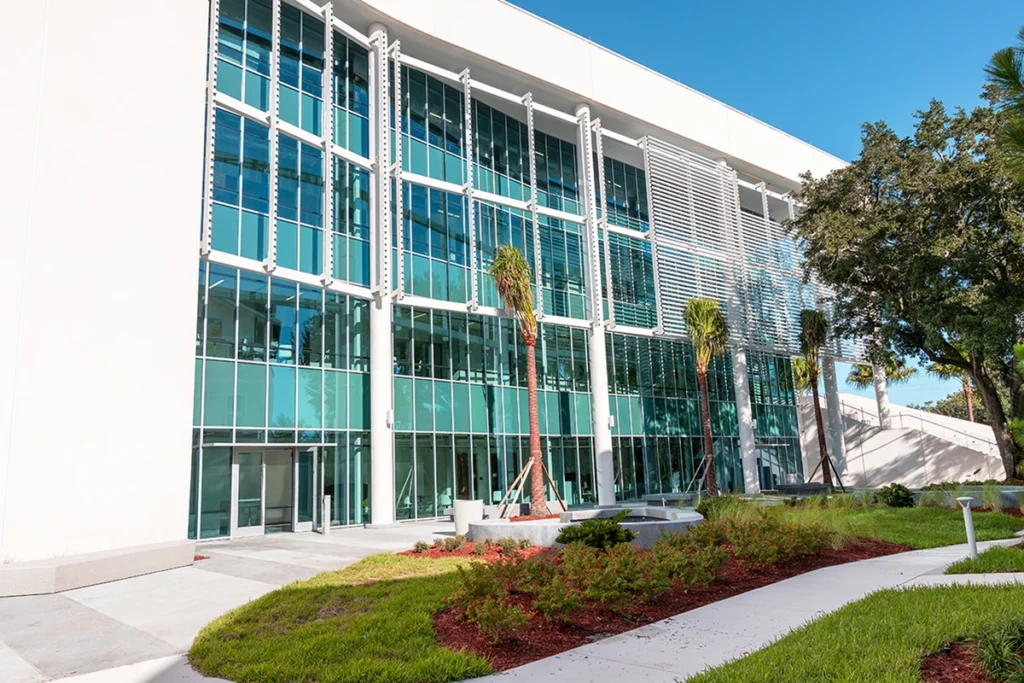
At AdventHealth University’s new Simulation Center in Orlando, endless hypothetical emergencies can unfold without putting a single real patient at risk.
“Nobody dies here, which is great,” says Todd Larson, the university’s director of simulation technology.
The facility, which opened September 24, allows future healthcare providers to navigate high-pressure situations before entering the workforce. Using lifelike patient simulators and immersive technology, students can make critical decisions in an environment where mistakes become learning opportunities.
The center opens as Central Florida’s growing population intensifies the demand for more healthcare workers.
Room to Grow
The center expands the university’s training capacity, particularly in nursing, while also supporting continuing education for practicing AdventHealth professionals.
Two floors are open, with a third being completed and space reserved for a fourth.
“We opened, and the need we were building for is already here,” says Bobbie Jean Cabezas, the university’s chief integration officer.
Larson confirms the demand is immediate.
“We opened at capacity,” he explains. “I have 100 nursing students in the building right now.”
Nursing and physician assistant students are primary users, alongside medical students from a regional program supporting Loma Linda University School of Medicine. With 28 degree offerings spanning clinical and spiritual care fields, AdventHealth University designed the facility to accommodate a variety of health care disciplines.
The center’s flexible design also accommodates other healthcare disciplines.
A residential apartment setting allows students to practice home-based care, while physical and occupational therapy programs can adapt the space for their needs.
University leaders also envision an opportunity for chaplaincy students to rehearse hospital visits and participate in interdisciplinary scenarios.
A Patient Unlike Any Other
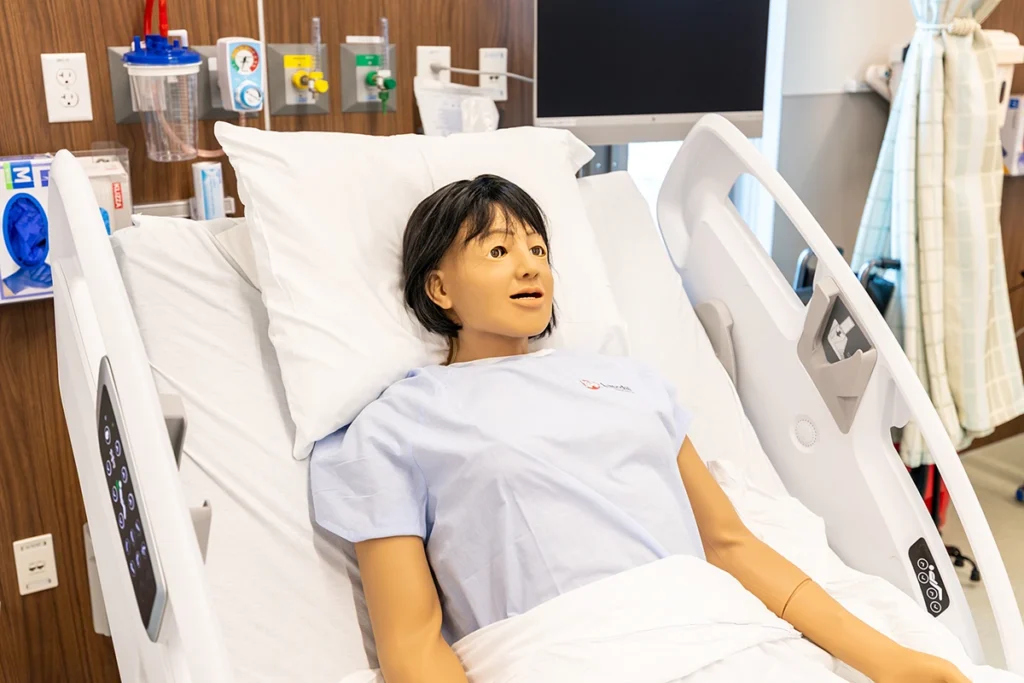
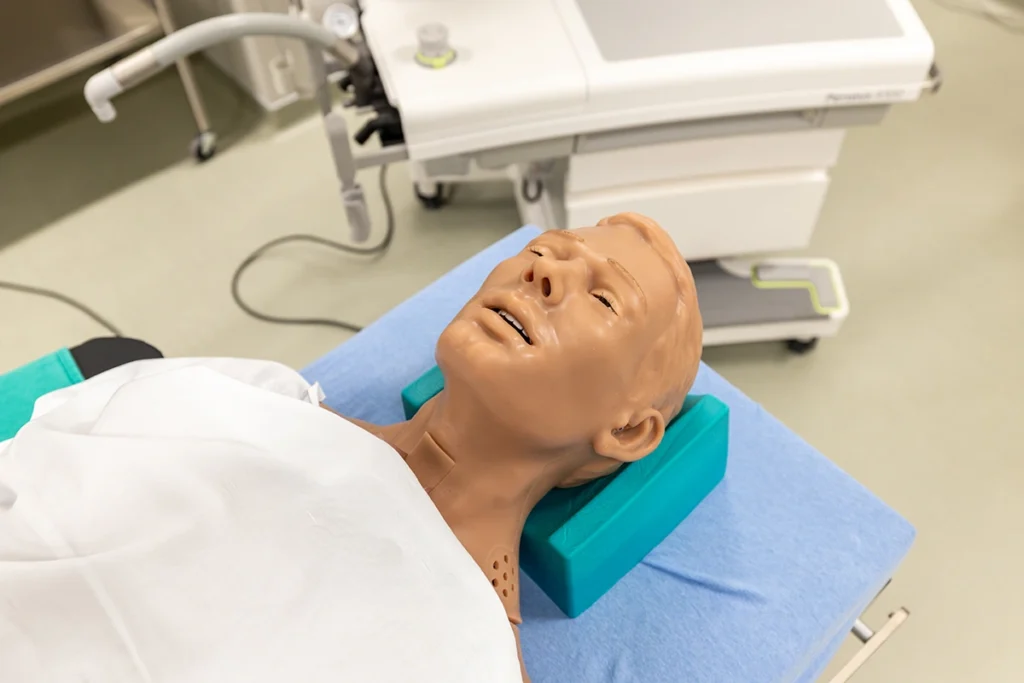
Meet Hal, a high-tech patient simulator capable of holding realistic conversations while displaying symptoms.
“Hal can tell jokes, you know,” Larson says.
But Hal’s more valuable capabilities include facial drooping to simulate a stroke and sweating that mimics symptoms of a heart attack. His artificial intelligence capabilities allow students to interact with him just as they would a patient.
Specialized birthing simulators can replicate deliveries and complications, including breech births. More than 60 standardized patient actors employed by AdventHealth also help create realistic encounters. Some even have professional experience from Orlando’s theme parks.
“We do rehearsals with them, so it’s just like rehearsing for any part in a play,” Larson says.
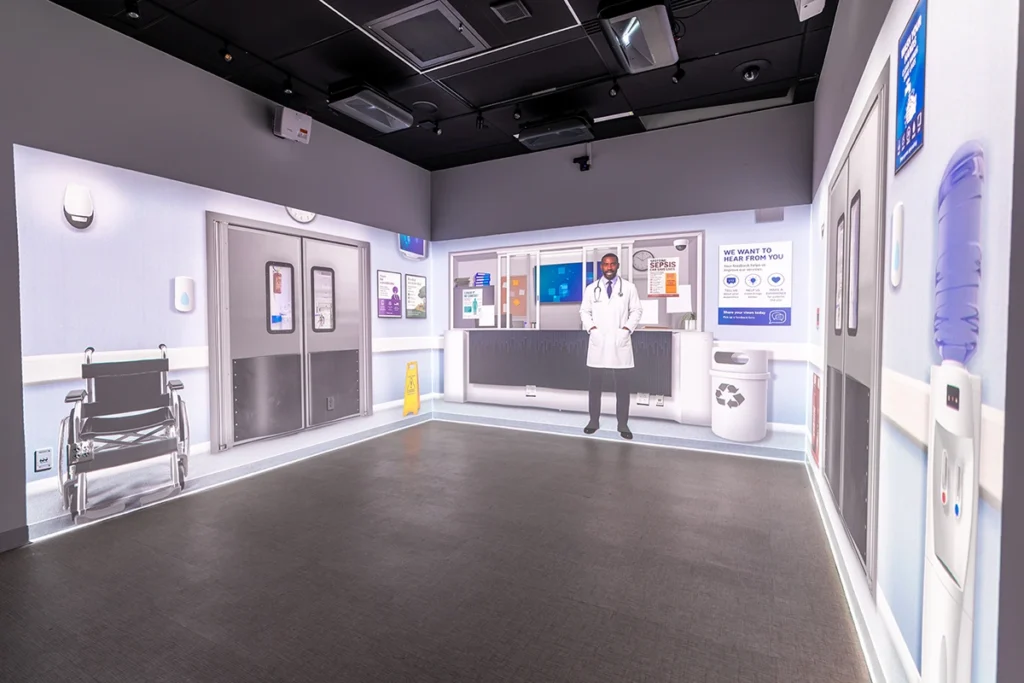
The center also holds an immersive room that surrounds participants with interactive projections, sound, and even simulated smoke or smells. According to Larson, it’s one of only three such immersive rooms in Florida, with the other two located at the University of Central Florida.
Virtual reality provides additional opportunities for training when certain clinical experiences are difficult to arrange.
All 10 simulation rooms feature the same smart-room technology being introduced in AdventHealth hospitals. Students also practice medical administration using equipment found in clinical settings, giving them real-life familiarity with procedures before treating live patients.
“In simulation, we call that suspending disbelief,” Larson explains. “So we want them to feel like they’re in the clinical environment, doing what they normally do on a day-to-day basis.”
Learning From the Replay
Cameras record students’ performances, allowing instructors to revisit crucial moments afterward.
“Sometimes it’s not about the technical skill itself; it’s how you are interacting with the group that you’re performing the simulation with,” Cabezas says.
Students can examine their responses and recognize missed opportunities. They can analyze performance before their next attempt, removing the consequences of a real medical emergency.
“The real learning actually happens in the debrief,” Cabezas says.
She emphasizes that this helps with clinical judgment and better prepares them, helping them feel more confident when they begin caring for actual patients.
“I want you to feel like the best professional you can be, even if you are just getting out of school or if you’re going through school,” she says.
An AI-assisted evaluation feature is also being prepared for implementation. Larson says it could review recorded performances against learning objectives and provide additional feedback alongside faculty evaluations.
“Musicians rehearse, athletes practice — and we should be doing the exact same thing,” Larson says.
Preparing for Central Florida
“We’re really a digital workforce now, so it’s not just the clinical skills. It’s the digital technology skills that they have to have,” Larson says.
Cabezas highlights culturally responsive care. Diverse patient simulators and data-informed scenarios can help students recognize how patients’ backgrounds and circumstances influence treatment.
She thinks the center can help future providers better understand the communities they serve. Despite its advanced equipment, Cabezas cautions that technology alone doesn’t create effective learning experiences.
“The people in the building that conduct and plan and do all of the structural logistics to create the learning environment are equally as important as how fancy the technology is,” she says.
For Larson, the center’s purpose extends beyond preparing students to use sophisticated medical equipment.
“We’re preparing them for the bedside to be better healthcare providers, and we’re doing it in a nonthreatening environment where they can really learn from their mistakes and move on and get better,” he says.
Cabezas sees that preparation as an essential part of caring for the whole person.
“If I can help you feel whole as a professional, I know you’re going to help your patients feel more whole when you deliver the care.”