
Lakeland Regional’s Homegrown Answer to the Physician Shortage
by REBEKAH PIERCE
When Daniela Carralero, MD, began exploring residency programs three years ago, Lakeland Regional Health wasn’t necessarily on her radar. She knew she wanted to train somewhere in Florida, preferably near her family in Tampa, but she knew little about the Lakeland hospital or its newly established internal medicine residency program.
One interview changed all that. She was impressed by the hospital’s facilities, clinical opportunities, and, most importantly, its people. By the end of her first year, she was sold.
“I definitely knew that I wanted to stay,” she explains.
Now, she’s an attending physician at Lakeland Regional, splitting her time between primary care and hospital medicine while helping teach the next generation of residents.
Carralero’s story is far from an outlier. Across Lakeland Regional’s first three graduating residency classes, dozens of physicians have chosen to stay in the health system or elsewhere in Florida, helping the hospital build a robust physician workforce from within.
A Goal Years in the Making
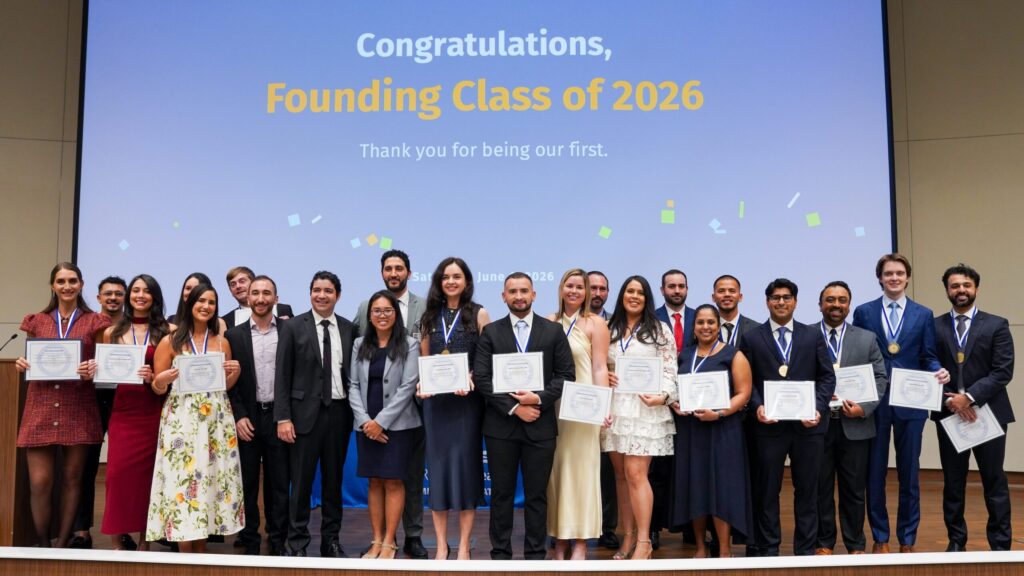
Lakeland Regional Health recently celebrated a major milestone: the graduation of its first classes of internal medicine, family medicine, and emergency medicine residents, along with its first surgical critical care fellowship class. Of the 41 physicians graduating from the three residency programs, 20 (nearly half) accepted positions at Lakeland Regional while another 14 chose to remain in Florida but practice elsewhere.
To Luis Lugo, MD, internal medicine residency program director, those figures represent the first outcomes of a goal the hospital has been working toward for years.
“This is one of the biggest things that this hospital has achieved,” he says.
Retaining physicians was a central motivation behind establishing the graduate medical education programs. And for Lugo, who previously practiced in New York City for nearly five years, the need for more physicians in Lakeland was something of a surprise. He recalls his initial disbelief upon learning that Lakeland Regional had one of the busiest emergency departments in the country. After all, he’d worked in New York. He knew what a busy hospital looked like.
But Lugo saw that volume as a symptom of a larger problem: a shortage of physicians in the surrounding community, leaving many patients to turn to the emergency department.
“The emergency department becomes the patients’ primary care,” Lugo says.
Training physicians locally offers a potential solution: Give young doctors opportunities to develop professional and personal connections with the community before they begin their careers.
Of course, completing a residency in Lakeland doesn’t guarantee a physician will remain in the city. The hospital competes with employers throughout Florida, including major health systems in nearby Tampa and Orlando. Graduates must weigh compensation, schedules, professional opportunities, and personal priorities when deciding where to practice.
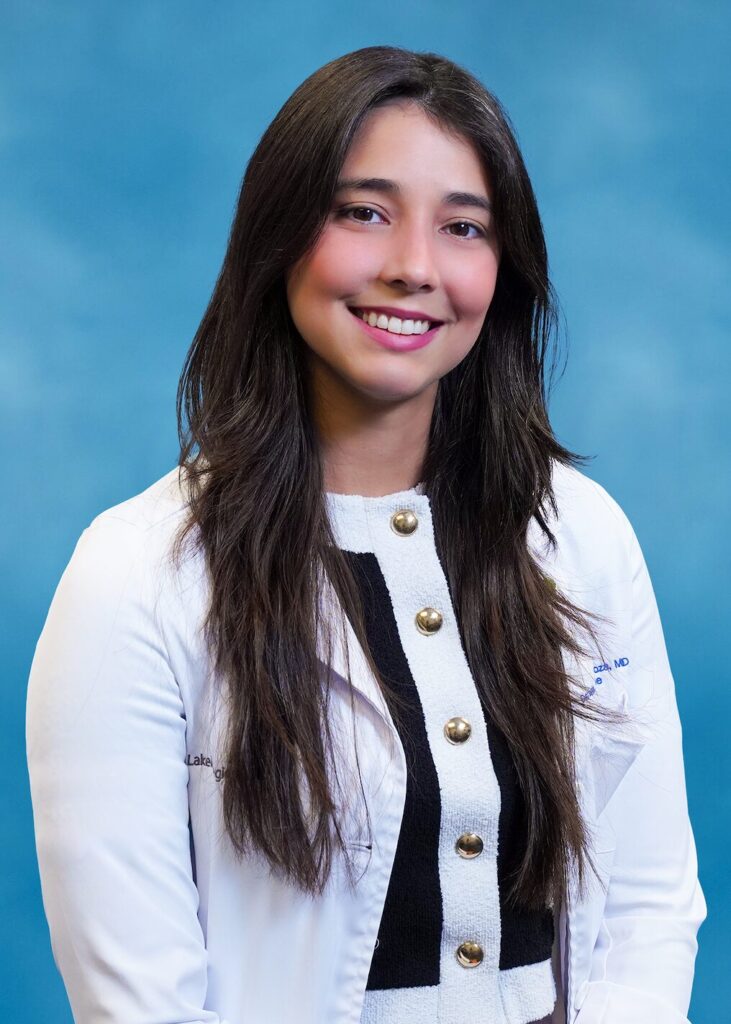
Daniela Carralero, MD, considered positions in both cities before accepting Lakeland Regional’s offer. She struggled to find another employer offering the exact combination she wanted: opportunities to practice both inpatient and outpatient medicine, participate in academic medicine, and maintain a manageable schedule.
Weighing All the Factors
Carralero considered positions in both cities before accepting Lakeland Regional’s offer. She struggled to find another employer offering the exact combination she wanted: opportunities to practice both inpatient and outpatient medicine, participate in academic medicine, and maintain a manageable schedule. Lakeland had it all.
Just as important to her were the relationships she’d developed over three years of residency.
“You keep working with the people that train [you],” she says.
“It was a sense of giving back.”
Those relationships also made it easier for her to transition from resident to attending physician. She already understood the hospital’s electronic medical records system, knew its clinical workflows, and had colleagues she could turn to for support.
Lugo says opportunities to teach and mentor future physicians have become another reason graduates choose to stay. Many graduates want to remain involved in the residency programs they helped establish, mentoring new physicians while continuing their own professional development.
“Everyone wanted to build something unique and special,” Lugo adds.
Lakeland Regional is building on that momentum by expanding its graduate medical education offerings. In addition to its residency programs, the hospital has introduced fellowships in pulmonary critical care, cardiology, and hematology-oncology, with plans to potentially add gastroenterology in the future.
Lugo says those opportunities are helping attract competitive applicants while supporting the hospital’s ambitions to expand its academic and clinical capabilities.
Some residents are interviewing for fellowships at prominent institutions, including Yale, Johns Hopkins, and Mayo Clinic. Although those opportunities could eventually take physicians outside Florida, Lugo hopes their advanced training will ultimately bring them back to the community.
Reaping the Rewards
Meanwhile, retaining graduates offers immediate benefits for the community. Carralero’s hybrid position allows her to provide continuity of care in a primary care setting while maintaining her hospital medicine skills. As a faculty member, she also contributes to training future physicians.
Lugo points to internal hospital quality metrics showing shorter lengths of stay and stronger performance measures in areas where residents participate in patient care. He sees those results as evidence that residency programs can strengthen clinical care while expanding the local physician workforce.
With its first graduating classes now entering practice, Lakeland Regional is seeing the results of an investment years in the making. And as the hospital expands its fellowship programs, research opportunities and academic ambitions, it’s creating even more reasons for physicians to build their careers in Central Florida.
For Carralero, that decision came down to more than compensation or convenience. She found colleagues who supported her, opportunities to grow professionally, and a workplace where she could envision a future.
“It’s about being in a place where they appreciate you.”
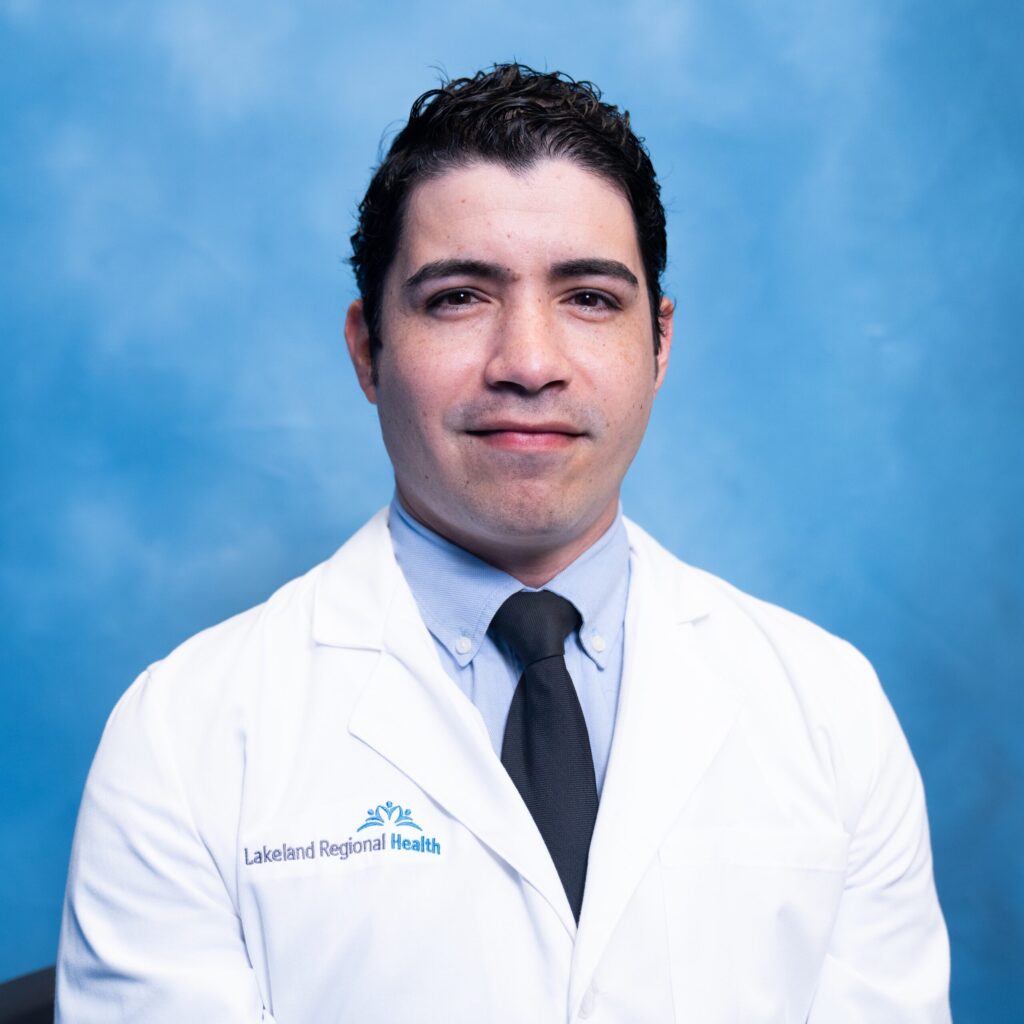
Luis Lugo, MD, says opportunities to teach and mentor future physicians have become another reason graduates choose to stay. Many graduates want to remain involved in the residency programs they helped establish. “Everyone wanted to build something unique and special.”