
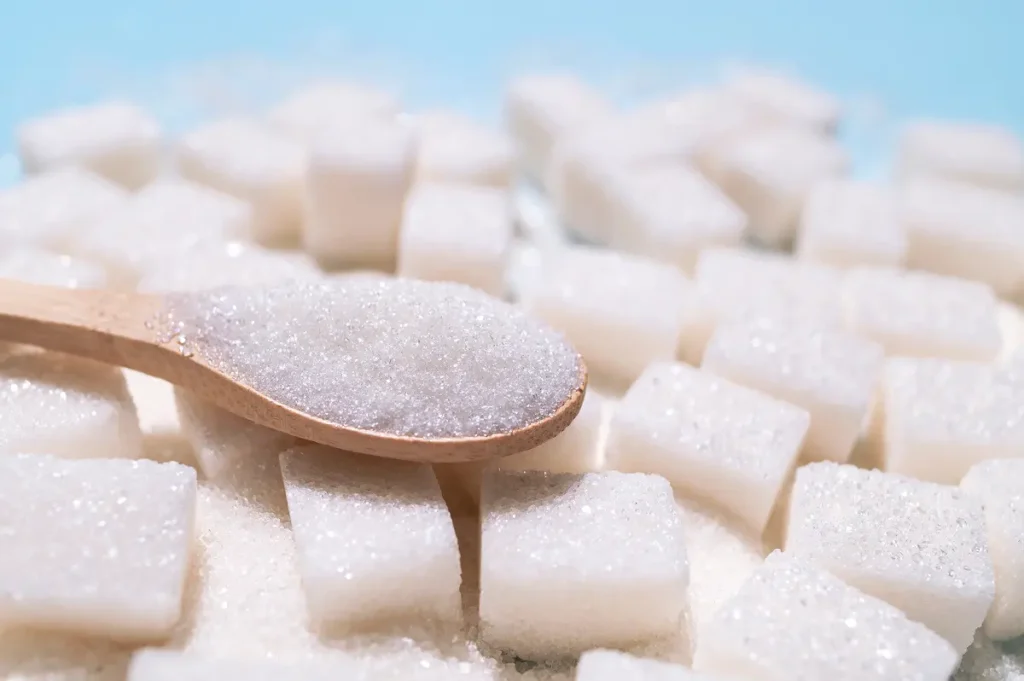
You May Be Getting More Sugar Than You Bargained For
The U.S. has a sugar problem, and it goes beyond just a sweet tooth. According to the CDC, of the more than 40 million people with diabetes — about 1 in every 8 adults — 90% to 95% of them have type 2 diabetes from poor diet and an inactive lifestyle. To add insult to injury, the American Diabetes Association estimates that about 115 million Americans have prediabetes. Additionally, the number of young people developing Type 2 diabetes continues to rise. Science is showing that added sugar is a major culprit. Take our quiz on sugar to learn how to strike a balance and protect your health.
Take our quiz on sugar to learn how to strike a balance and protect your health.
-
True or false? Our bodies don’t need sugar to function properly.
-
The daily recommendation for added sugars is that they should account for no more than 6% of your daily caloric intake, or about 6 to 9 teaspoons a day for adults, but many Americans eat how much sugar a day?
-
Which of the following are health problems that can be caused by consuming too much added sugar?
-
True or false? While eating too much sugar does not cause type 2 diabetes, it’s part of the chain reaction of weight gain and obesity, insulin resistance, pancreatic exhaustion, and liver fat accumulation.
-
Which of the following is the definition of “naturally occurring sugar”?
-
Added sugars are any sugars or caloric sweeteners that are added to foods or beverages during processing, preparation, or packaging. Which of the following is NOT an example of an “added sugar” that you might find on a food label?
-
Which listing on a nutrition label will tell you the amount of sugar that has been added to a packaged food or beverage?
-
True or false? Nutrition labels list ingredients from the highest amount to the smallest amount. If a type of sugar is at the beginning of the ingredient list, that’s a good clue that the food has added sugars.
-
Which of the following is NOT a food or beverage that is likely to have hidden added sugars?
-
Which of the following is NOT true when it comes to artificial sweeteners like sucralose, aspartame, saccharin, and stevia?
Compiled by ERIKA ALDRICH / Information from FDA, CDC, and American Heart Association
ANSWERS
- True
- D. 17 teaspoons
- D. All of the above
- True
- B. Sugars found naturally in foods
- C. Sugar alcohols; they are a type of no-calorie sweetener
- B. Added sugars
- True
- C. Whole fruits and vegetables
- B. There are no conclusive studies that show that no-calorie sweeteners cause cancer.