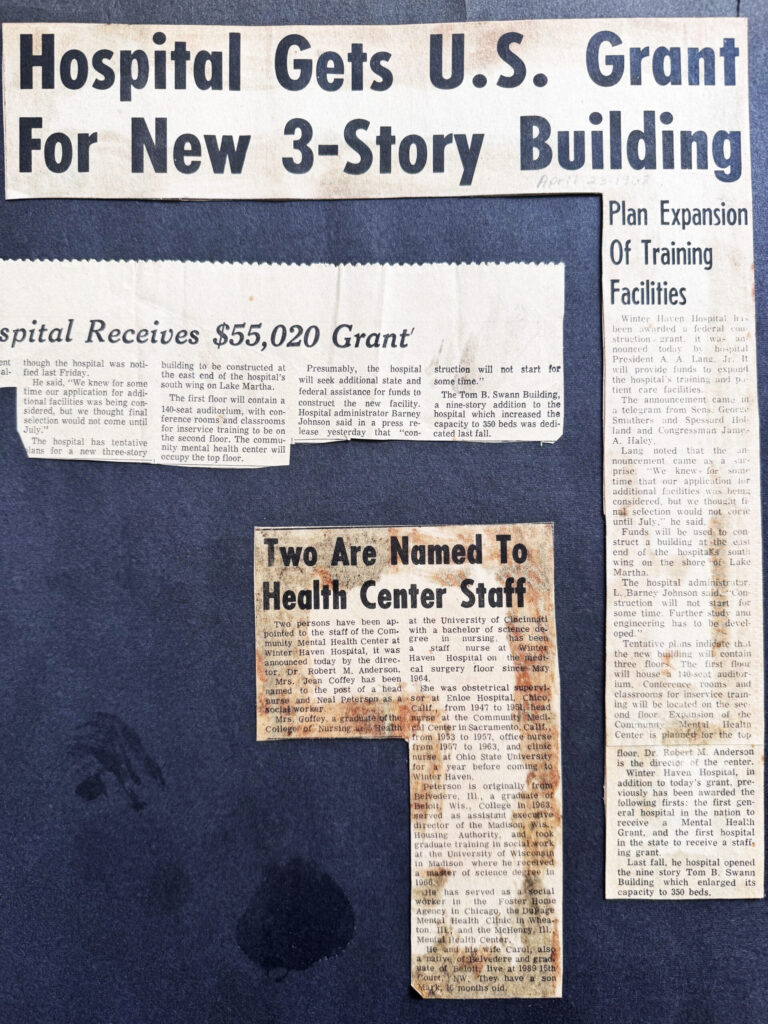
Nearly 6 decades ago, it was one of the nation’s first community
mental health centers created with federal funding.
by SHAYLYNN MARKS
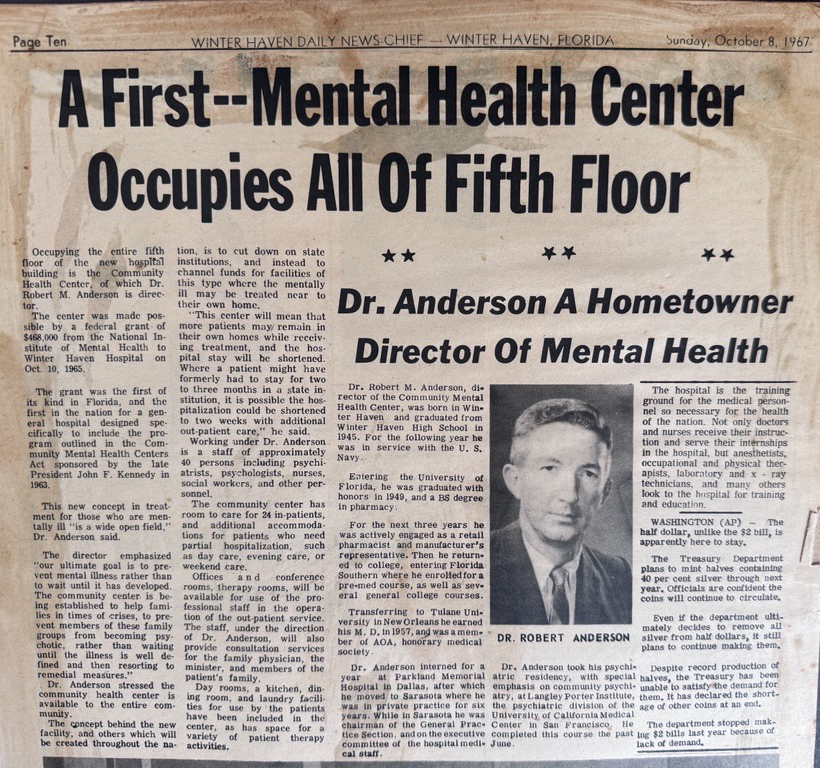
When Winter Haven Hospital celebrates its 100th anniversary this fall, the milestone will also highlight one of the hospital’s most enduring contributions to the community: nearly six decades of expanded access to behavioral health care.
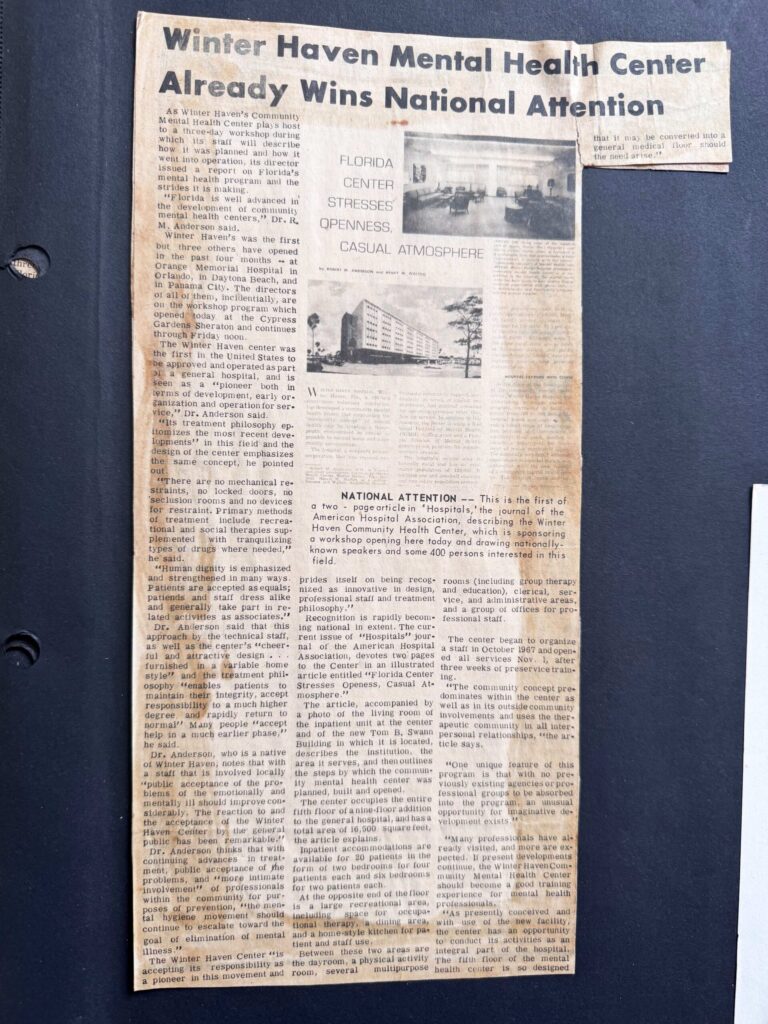
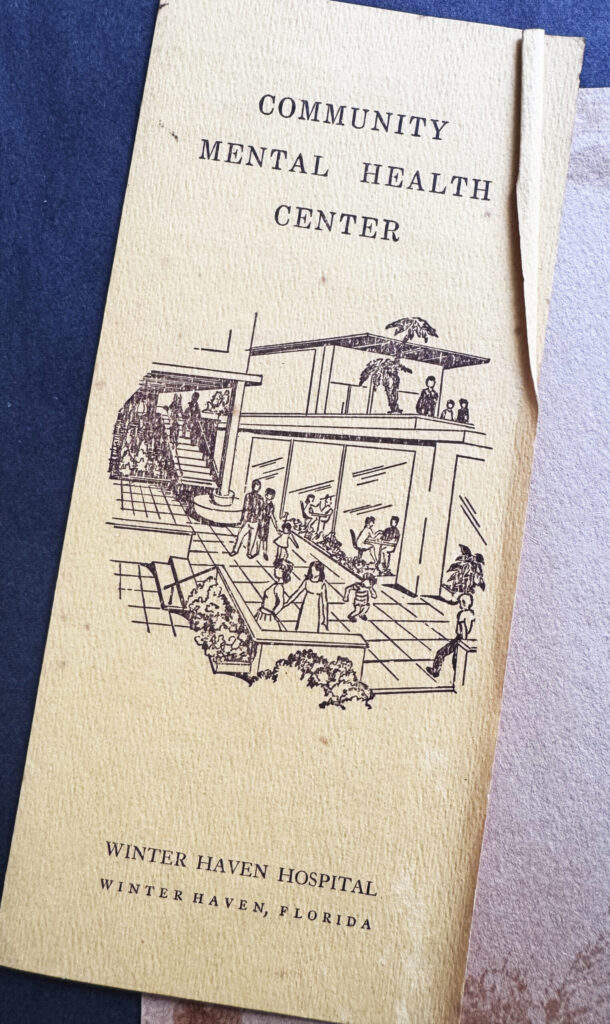
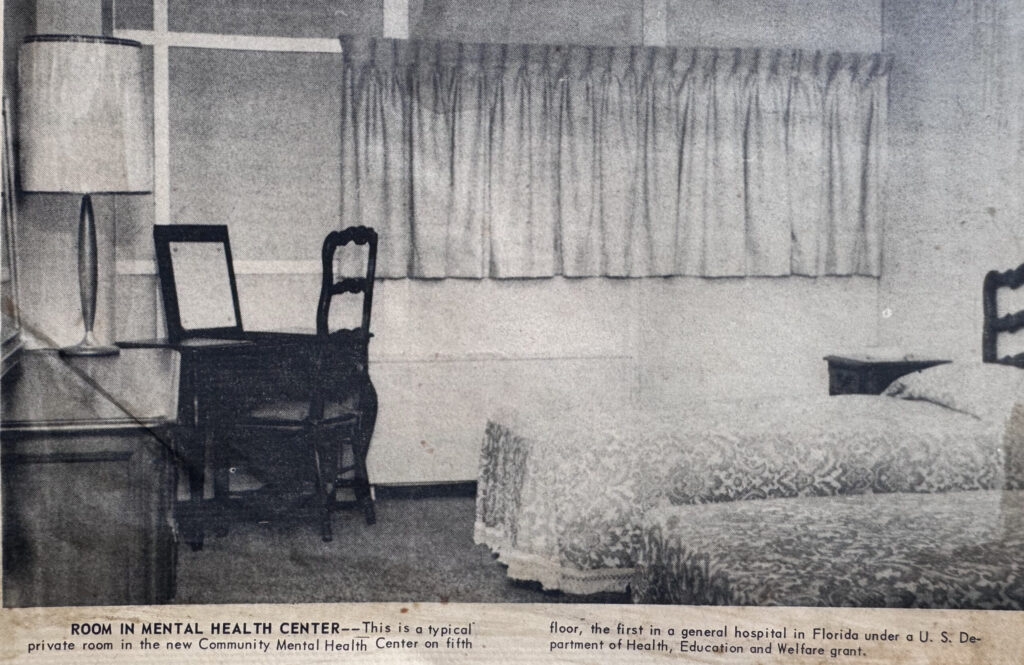
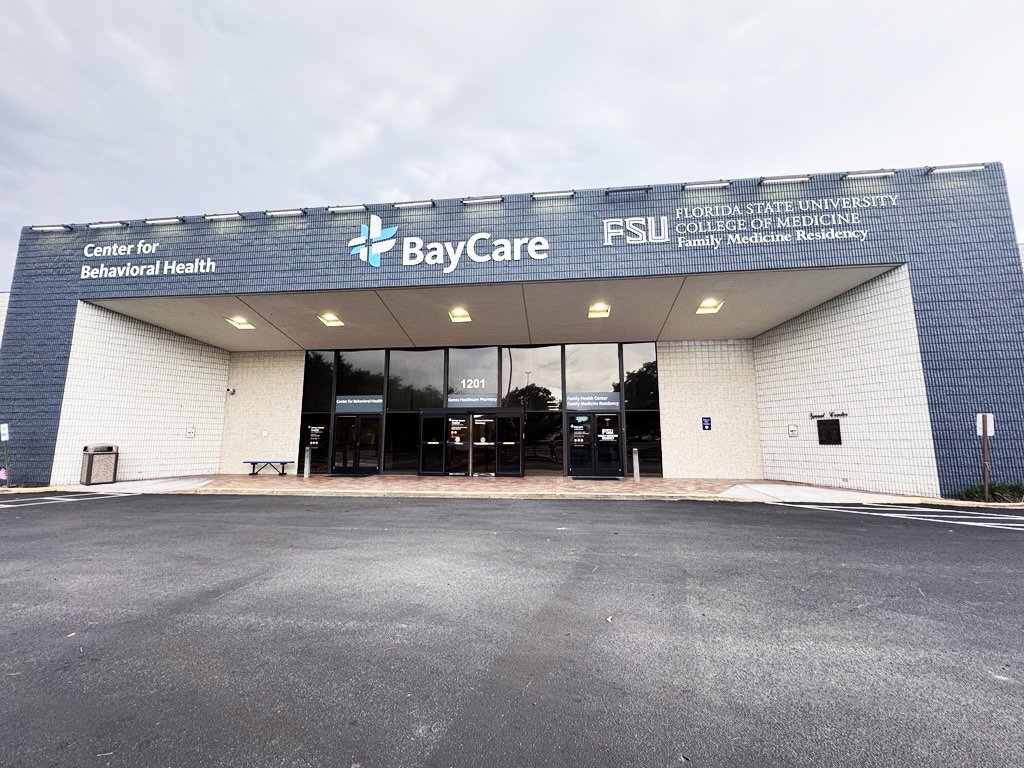
Established in 1967, the hospital’s Center for Behavioral Health was among the nation’s first community mental health centers created with federal funding. Its founding followed a national movement to replace long-term institutionalization with treatment closer to patients’ homes, families, and support systems.
For psychiatrist Dr. George C. Winny, Regional Medical Director of Behavioral Health at the Center, that history gives the center a significance extending beyond its buildings.
“For me, it is holy ground,” Winny says. “I became the custodian.”

Making Mental Health Services More Accessible
Before community mental health centers began opening, people with serious mental illnesses were frequently removed from their communities and placed in state hospitals. Treatment options were limited, and stigma often made a patient’s return home even more difficult.
“The care was shifted slowly to the community mental health centers,” says Winny, who has proudly served Winter Haven for 22 years. “The idea was to bring people closer to their home, closer to the family, closer to where their support system is.”
As research improved understanding of how brain chemistry, genetics, trauma, and a person’s environment can contribute to mental health conditions, treatment also became more comprehensive. Public awareness helped reduce some of the stigma surrounding care, while medication, therapy, early intervention, and trauma-informed approaches created more ways to help patients.
Today, the center provides medication management, individual and group therapy, case management, school- and home-based services, and telehealth. It also increasingly emphasizes integrated care, which recognizes that physical and mental health cannot always be treated separately.
“Many of these chronic psychotic patients, like those with schizophrenia and bipolar disorder, die 15 to 20 years early because of a medical issue,” Winny says. “We have to treat mental health and physical health together.”
Opening Every Door Possible
The center served more than 7,900 people last year, and 57% were at or below 200% of the federal poverty level. The center aims to provide care to patients regardless of insurance status or ability to pay.
That mission is especially important in Polk County, where a large geographic area, transportation challenges, financial limitations and a shortage of behavioral health providers can prevent people from getting traditional office-based services.
“We open up every door we can,” Winny says.
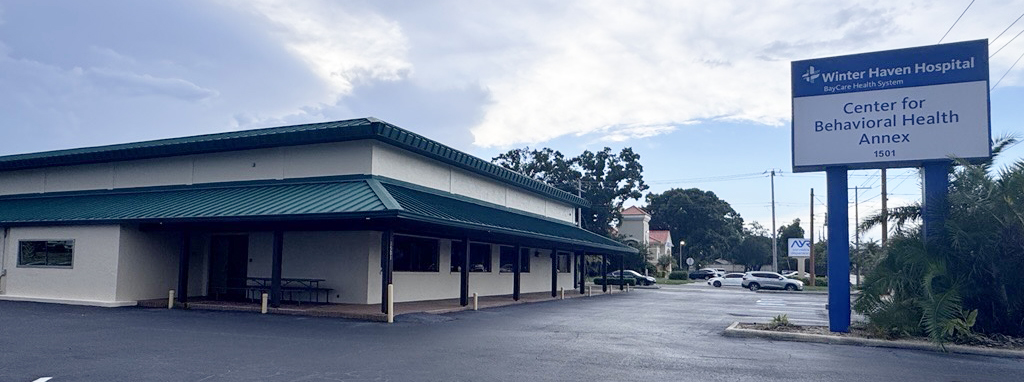
One of those doors is the center’s Annex, home to a community-focused peer recovery hub where adults with behavioral health needs can find group services, support, and connections to continued care. Winny says the program has helped reduce missed follow-up appointments among patients leaving inpatient treatment, interrupting a cycle in which some individuals repeatedly return to crisis care.
The center has also expanded its clinical team, therapy programs, case management services and educational role. Family medicine residents from Florida State University’s graduate medical education program rotate through psychiatry with Winny, a process that helps new physicians better recognize and respond to behavioral health needs.
Care That Begins with Trust
Despite advances in treatment, Winny says compassion remains the center’s most important tool.
“There is only one language in this world,” he says. “If the person on the other side knows this person cares, they open up their heart. They have to feel safe.”
That trust can be particularly important for children and teenagers who arrive feeling isolated or hopeless. Winny often begins by reminding young patients that each of them is “custom made” and therefore has a purpose no one else can fulfill.
“When your heart is open, when you are able to talk to me, there is hope,” he says. “In that emptiness, in that hopelessness, in that darkness, you have to come and lift them up.”
Growing to Meet the Need
Demand continues to grow, particularly amid rising instances of anxiety, depression, loneliness, and substance use in adolescents and young adults. Winny also sees an urgent need for more comprehensive autism services as children with autism enter adulthood and families struggle to find continued support.
The center already has outgrown its original space and expanded into the Annex. Its next focus will be where and how to reach further into the community.
“Where are we going? Only expansion,” Winny says. “The need is there.”
Those long hours, difficult cases and quiet victories are fueled not by his accolades but by a deep sense of calling.
“Joy is the smile of a soul who has found its purpose,” he says. “I found my purpose. I wake up in the morning and continue the journey.”