April’s Acres in Lakeland Boosts Balance & Coordination
by SHAYLYNN MARKS
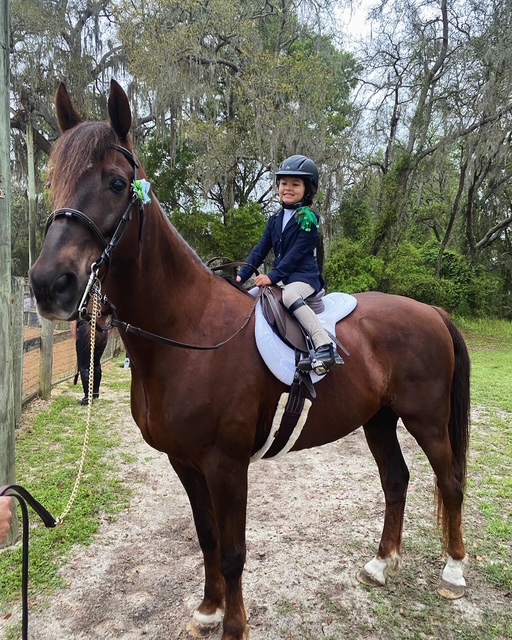
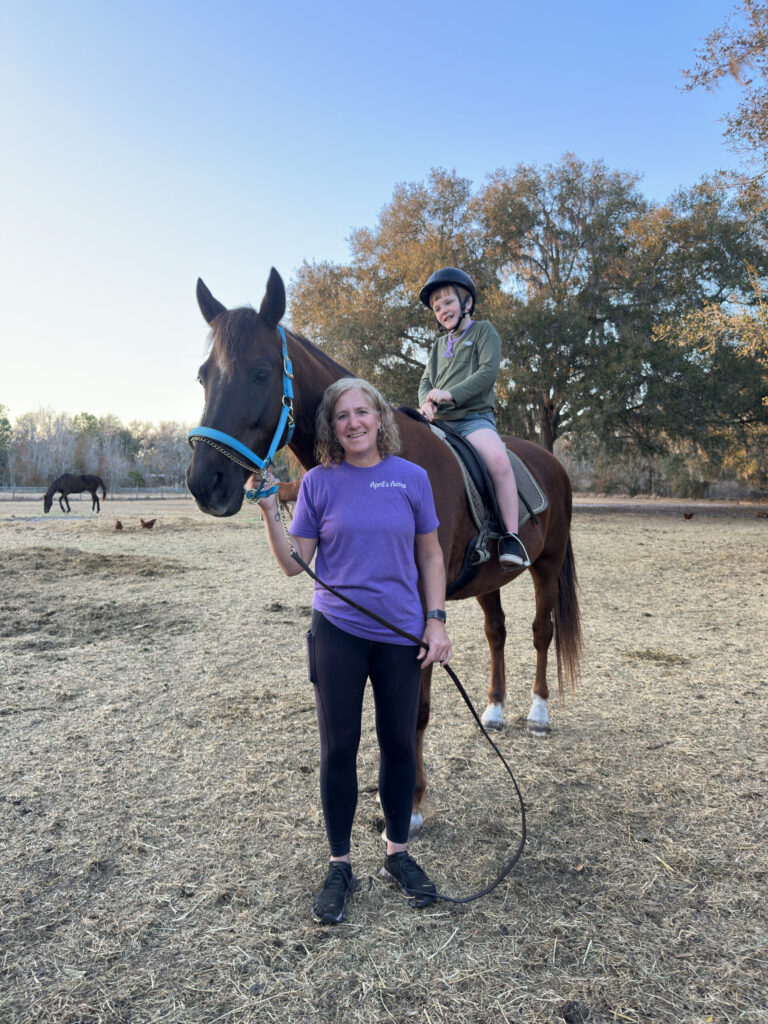
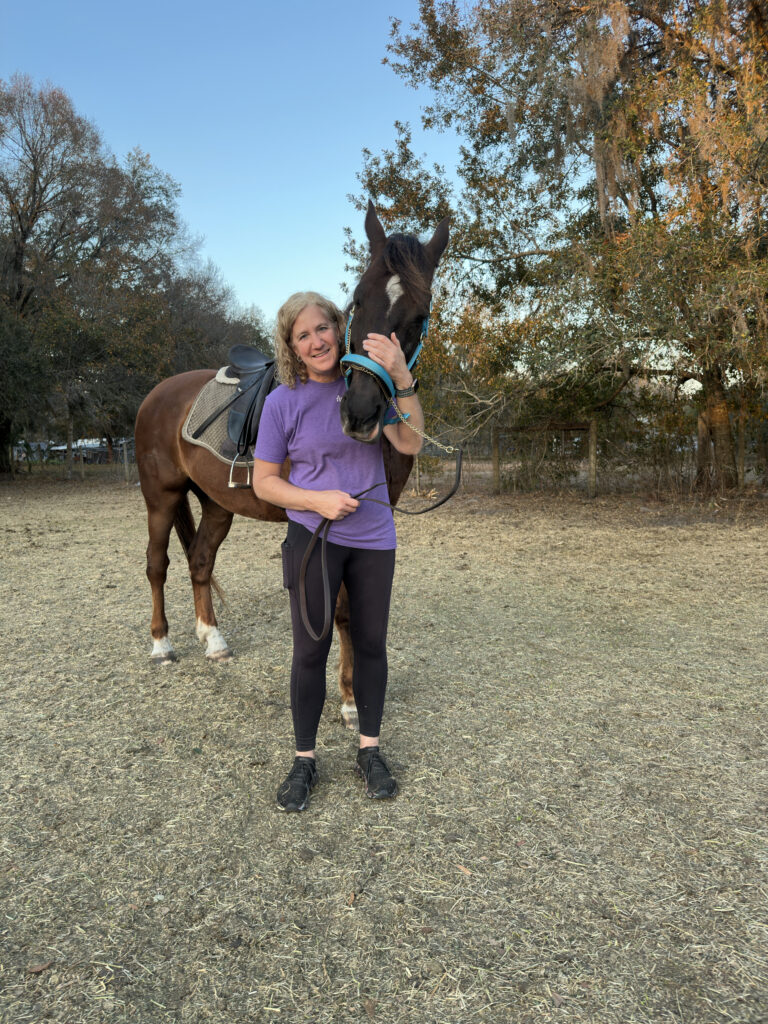
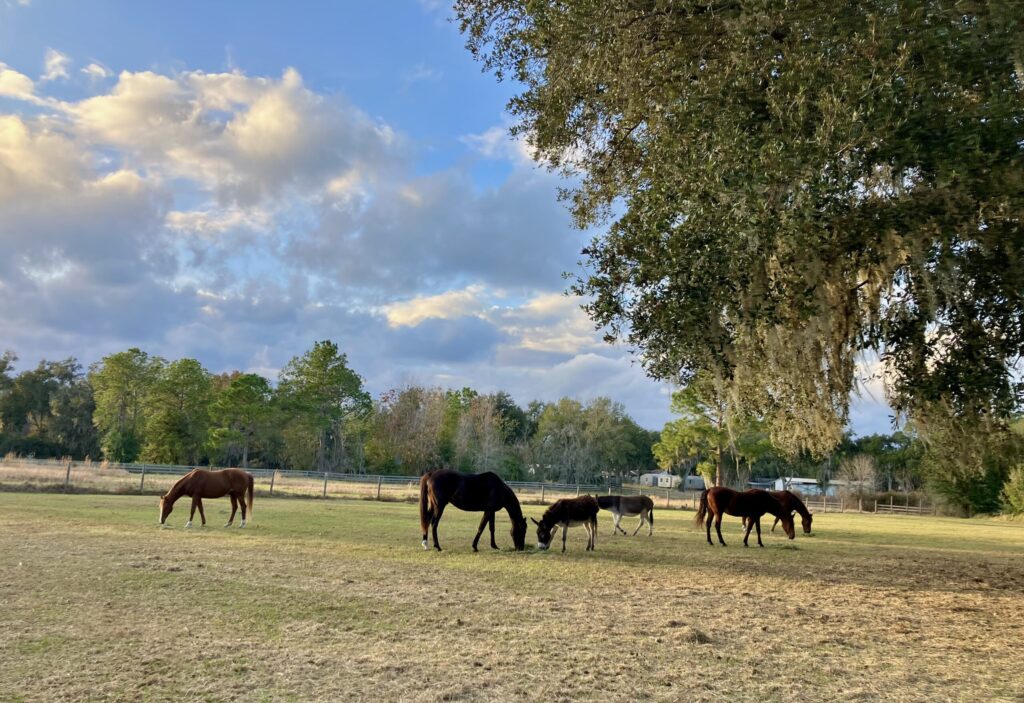
At April’s Acres, an equine-assisted therapy program in Lakeland run by board-certified psychiatric mental health nurse practitioner Beth Houston, families are using time with horses to support physical goals that can be difficult to replicate indoors.
Houston founded April’s Acres after volunteering at a local horse rescue and noticing how children responded to the animals. Today, she works full time in health care and runs sessions at the farm in the evenings and on weekends.
How April’s Acres Began
Houston said her path to equine-assisted work started about five years ago, when she began volunteering at a horse rescue in Plant City.
Within months, she met April, a gentle older horse she later adopted. Houston began taking lessons and brought April home. Shortly after, she adopted two more rescue horses, including Romeo.
At the time, Houston said, she was working as a pediatric nurse at outpatient centers while pursuing graduate training. As she began inviting families to visit and spend time with the horses, word spread.
“It kind of blew up at one point,” Houston said. “I started getting a lot of kids that were on the spectrum. So I was seeing a calming effect and what a difference it was making for them.”
Houston said she completed an initial certification through Spirit Horse International about three years ago. The program, she said, was geared more toward riding progression at larger centers, so her focus has remained on what her setting can safely support.
A Moving Platform for Strength and Stability
Equine-assisted therapy is often discussed for its mental health benefits, but families at April’s Acres also see it as a way to support physical development, especially for children working on balance, body awareness, and functional mobility.
“As a horse walks, turns, and changes pace, riders must continually adjust to stay centered,” Houston explains. That constant, rhythmic motion can activate trunk muscles and support postural control.
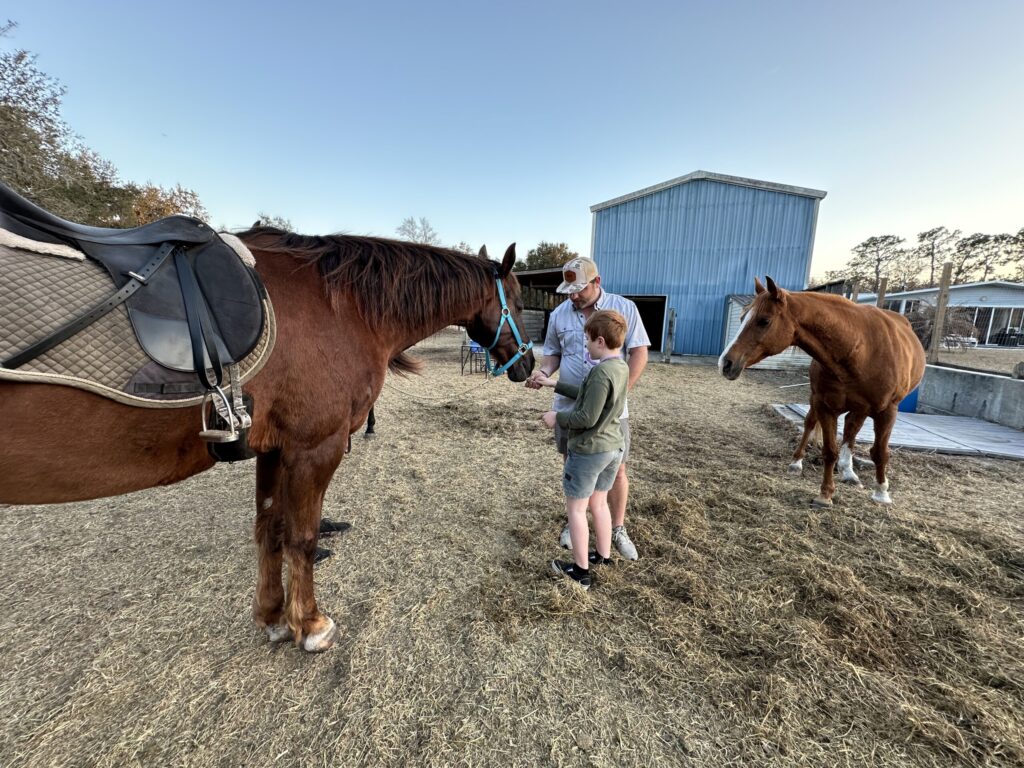
Preparation can be part of the therapy as well. Grooming and saddling can require reaching, grip strength, and bilateral coordination, while following a sequence of steps can reinforce motor planning.
“Regardless, though, a lot of the kids that come — they do have some physical weaknesses,” Houston says. “Even kids with autism have this decreased awareness of where their body is in space, so it kind of improves their posture and their balance — core strength, leg strength — all those types of things.”
For participants who are ready, Houston said she introduces basic riding cues, including reins and leg signals, to practice coordination and controlled movement.
A Family’s Perspective
Katie Schwartz began looking for equine-assisted therapy after her daughter, Charlotte, who goes by Charlie, who was diagnosed with Rett syndrome, a rare neurological genetic disorder.
One of the hallmarks, Schwartz says, can include major regressions.
“Charlie lost all of her speech and the words she once could say,” Schwartz says. “She totally lost control of her arms and hands … She has difficulty with balance and may one day lose her ability to walk.”
Charlie has participated in multiple therapies since she was 2 and now receives occupational, physical, and speech therapy, along with equine-assisted sessions.
“The motion of riding also mimics the muscle patterns used in walking, which supports functional movement and postural control,” Schwartz says.
Schwartz said Charlie’s school physical therapist noticed changes after a short period of sessions.
“Her school PT noted seeing big changes in Charlie after only two months of therapy last summer,” Schwartz says.
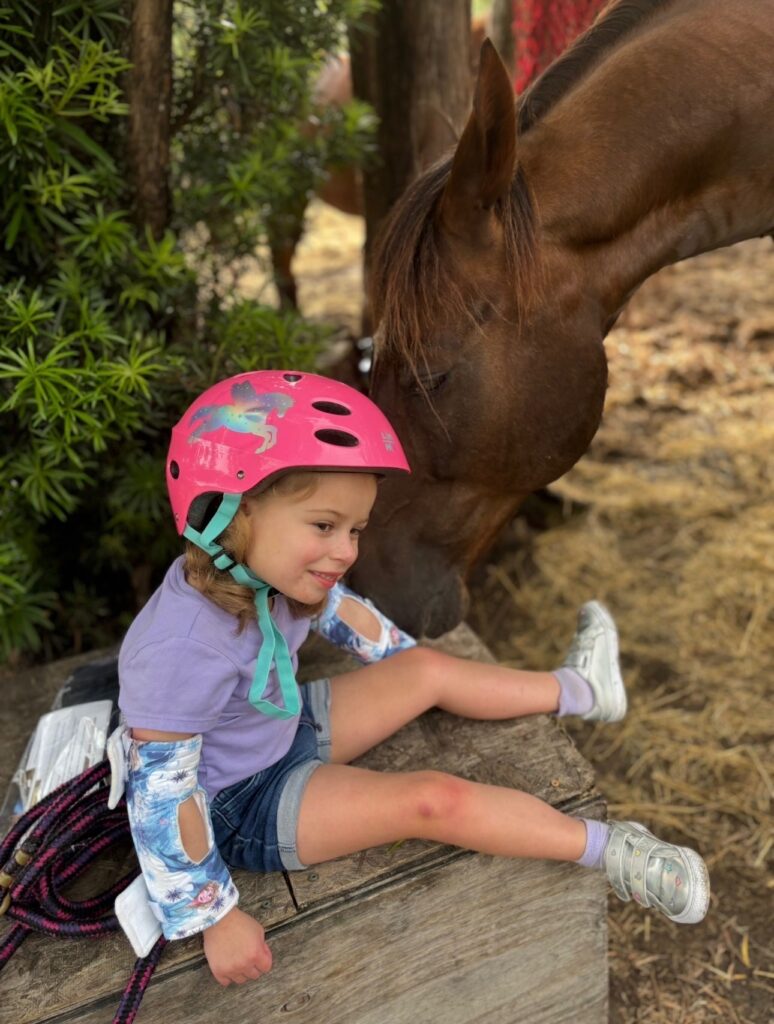
Equine-assisted therapy sessions can also be structured to prompt functional hand use. Activities can encourage reaching and grasping, and Charlie’s family hopes she can eventually progress to holding the reins.
“Charlie is not strong enough to grasp the reins yet,” Schwartz said, “but we’re hoping she can advance to that one day.”
For Schwartz, the experience has also grounded Charlie’s enthusiasm for being outdoors with an animal she trusts.
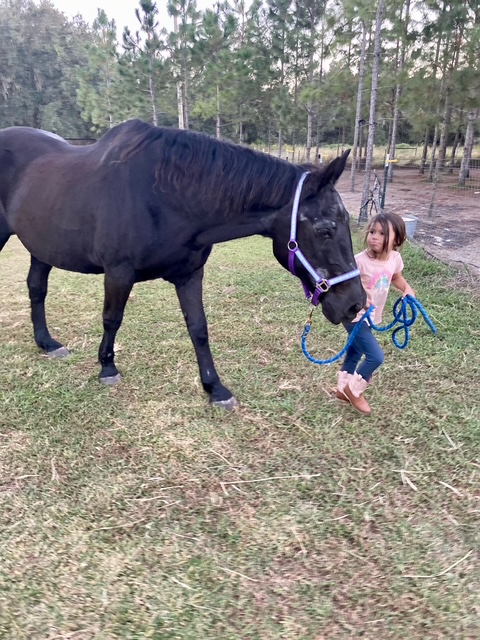
“Charlie loves being outside and is a big animal lover,” Schwartz says. “She instantly connected with one of the horses at April’s Acres named Romeo. He greets Charlie with a nuzzle to her face at the beginning of each session.”
Why Families Keep Coming Back
While equine-assisted therapy is not a complete replacement for physical therapy or occupational therapy, families often describe it as an additional method that motivates movement through relationship and routine.
For Houston, the goal at April’s Acres is to meet children where they are and reinforce what families are already working on.
“When I first meet the families, I talk to them about the types of therapies and things that they’re currently doing so that we can kind of reinforce whatever they’re looking to work on,” Houston says.
She often hears feedback from parents, doctors, and therapists about progress they are seeing.
Schwartz says that for Charlie, the benefits extend beyond strength and coordination.
“It’s like PT, OT, speech therapy, and mental health therapy all rolled into one,” she says. “Honestly, it’s therapy for me too, to see my girl so happy and being able to enjoy a therapy that doesn’t feel quite so clinical as her other therapies do.”